.png)
Restaurant tech's next frontier isn't the front of house. It's the back office.
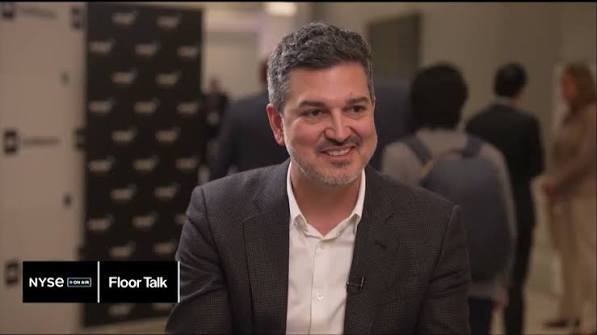
Craftable CEO David Cantu sat down with Ashley Mastronardi on NYSE Floor Talk at the ICR Conference to talk hospitality tech innovation, and why the back office is where the next wave of restaurant technology gets won.
Watch the full interview here: Craftable CEO David Cantu on Hospitality Tech Innovation at ICR
When David Cantu talks about hospitality technology, he does it as someone who ran the floor first. He began his career at Outback Steakhouse and P.F. Chang's, co-founded HotSchedules and spent more than two decades scaling it, and later led Black Box Intelligence before taking the helm at Craftable. That operator background shapes his read on where restaurant technology is heading, and on the NYSE floor at ICR he made the case that the biggest opportunity is the part of the business guests never see.
An operator's view of where the industry is heading
Most conversations about restaurant technology gravitate to the front of the house: point of sale, online ordering, loyalty, guest-facing apps. That's where the last cycle of investment went, and it's where the visible innovation has happened.
David's argument is that the front of house is largely solved ground. The harder, more valuable problem sits behind it, in the systems that decide whether a location actually makes money. His view, consistent across his public appearances, is that most restaurants and hotels still run their back office much the way they did twenty years ago, on a patchwork of separate tools and spreadsheets that keep the most financially important data slow and scattered.
Why the back office is the next frontier
The back office is where margin is won or lost: purchasing, receiving, inventory, invoices, payments, and the financial reporting that ties them together. It's also the most fragmented corner of hospitality operations, which is exactly why David sees it as the next frontier.
When those functions live in separate systems, the numbers that matter reach operators too late to act on. A price increase, a usage variance, or a waste signal shows up at month-end, after the money is already gone. Consolidating that work into one connected platform is what turns back-office data from a rearview report into something operators can act on while it still matters.
AI that points operators to what matters
Artificial intelligence ran through the ICR conversation, and David's framing of it is characteristically grounded. The opportunity isn't AI that generates more reports. It's AI that reads the data operators already have and surfaces the handful of things worth their attention.
Instead of asking a manager to pull reports and hunt for problems, the goal is a platform that flags cost anomalies, inventory variances, and margin erosion, then explains why they matter. Tied to real operational outcomes rather than floated as a feature, that's where David sees AI earning its place in the back office.
Protecting margins, one decision at a time
The connective idea is that profitability isn't produced by one big initiative. It's produced through the daily decisions operators and managers make, and those decisions are only as good as the information behind them.
That's the case for Craftable. The platform brings purchasing, inventory, invoices, payments, and financial reporting into one system, giving operators live visibility into the numbers that drive margin. More than 10,000 operators and 80,000 hospitality professionals run on it, with over $5 billion in purchasing and millions of invoices flowing through it each year. The value isn't the feature list. It's that the data finally connects, so operators can protect profit before small losses compound.
Watch the conversation
Hear David Cantu's full take on hospitality tech innovation, the back office, and where restaurant technology goes next, from the NYSE floor at ICR:
Craftable is the single back office for restaurant and hospitality operators, unifying invoices, inventory, ordering, and daily profit-and-loss visibility in one system. Operators use Craftable to control food and beverage costs, automate accounts payable, and act on their numbers the same day — not at the end of the month.
Craftable serves hospitality groups including bartaco, Hôtel Swexan, TC Restaurant Group, Woods Coffee, and José Andrés Group.