
Your food cost shouldn't be a month-end surprise.
Counts on a clipboard and recipes in a spreadsheet mean the number shows up weeks late — and already wrong. Craftable prices every recipe from live invoice costs, matches counts against sales, and shows the variance down to the ingredient. The fix happens this week, not next quarter.
The menu says 28%. The P&L says 32%. The gap has causes.
Theoretical food cost is what your recipes say you should have spent. Actual is what the counts and invoices say you did. Without a line-level match between the two, the difference stays a mystery you absorb every month.
Craftable matches theoretical usage against counts and sales line by line — so those four points of sales stop being a mystery and become a list of fixes with dollar amounts on them.
From the shelf to the P&L — counted, costed, explained.
Count what's on hand. Craftable keeps recipe costs current, matches usage against sales, and shows you exactly where the variance lives.
Count it
Shelf-to-sheet counts on any device, with barcode scanning for audits and receiving. No clipboard, no re-typing into a spreadsheet.
Cost it, live
Invoice AI maps every invoice line to your items as it's read — so when a vendor price moves, every recipe and batch recipe reprices itself.
Match usage to sales
POS sales tell Craftable what should have left the shelf. The count tells it what did. Theoretical vs. actual, computed on every item.
See the variance
The gap lands as a ranked list — by ingredient, by dish, by location — with the dollar amount attached to each line.
Fix the menu
Map every dish by margin and popularity, simulate a portion or price change, and watch forecasted profit against actuals.
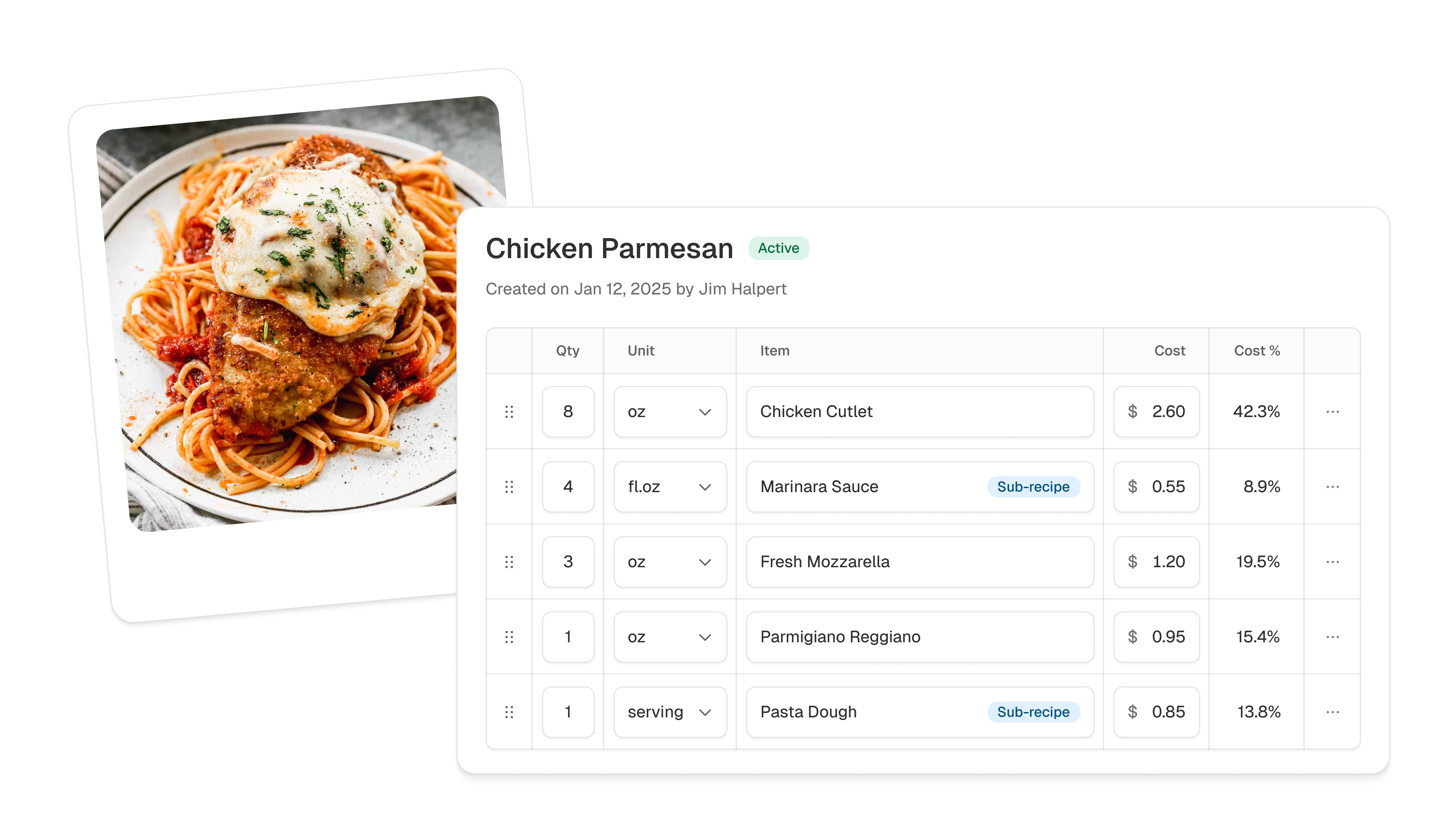
Every plate carries its own cost card.
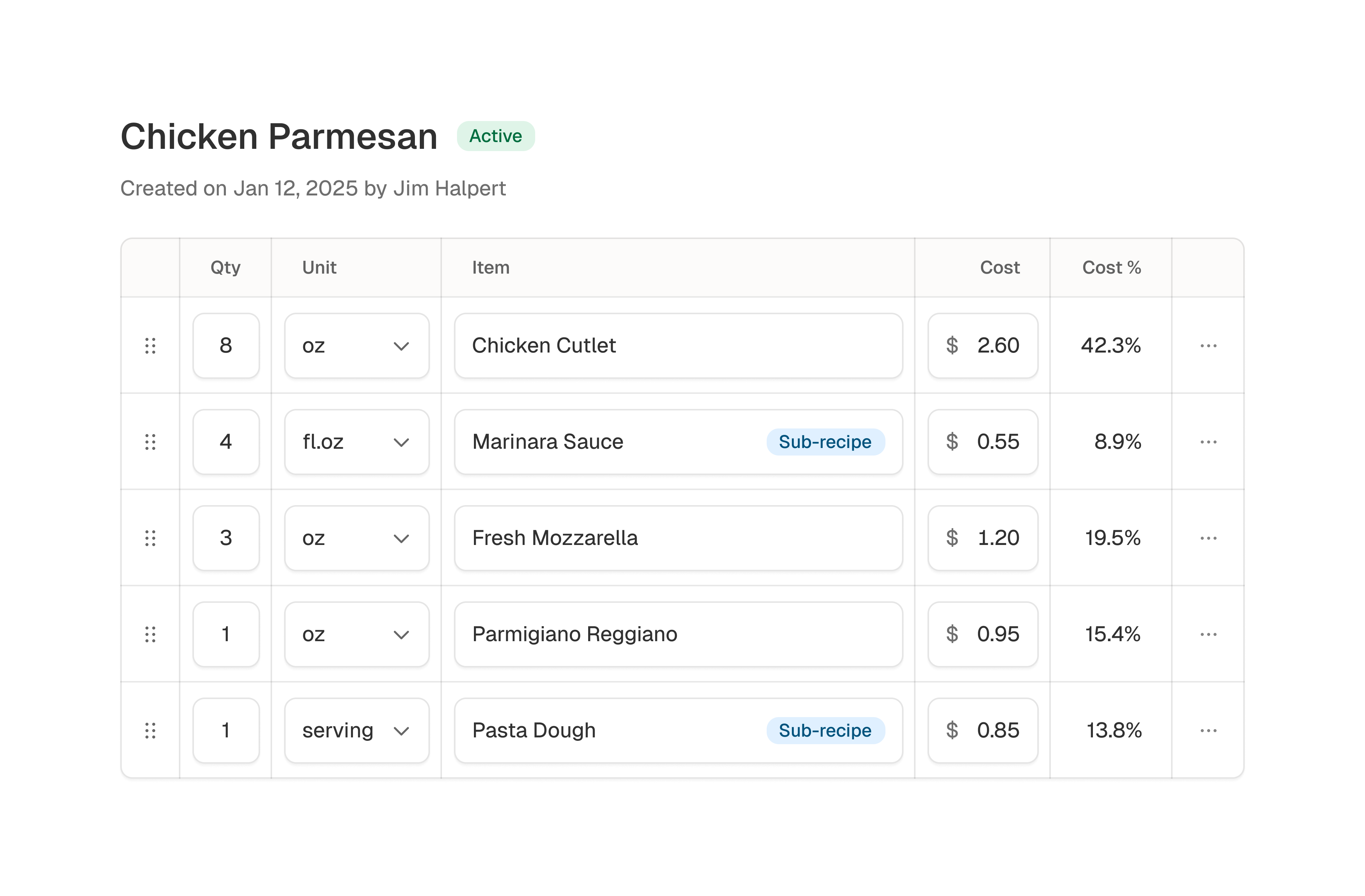
Each recipe prices itself from live vendor costs — down to the sub-recipe. The marinara and the pasta dough carry their own ingredient costs, and a price change on any invoice rolls up through every dish that uses them.
Count, cost, match, and decide — in one place.
Recipe costs that keep themselves current
Invoice AI maps every invoice line to your inventory items as it reads — vendor, pack size, price. When this week's chicken costs more than last week's, every recipe that touches it reprices automatically. No catalog maintenance, no stale plate costs.
Live inventory, every location
Stock visibility across departments and locations, with transfers tracked so the bar and the kitchen stop arguing over the same case of limes.
Mobile counts & barcode scanning
Shelf-to-sheet counts from a phone or tablet, with barcode scanning for audits and receiving. Counts post the moment they're done.
Recipe & batch costing
Plate costs auto-calculated from live vendor pricing, with sub-recipes and yields handled. Batch recipes update when any input changes.
Theoretical vs. actual variance
Usage from sales matched against counts, line by line — with Operator AI surfacing cost anomalies ranked by dollar impact.
Menu engineering
Margin-by-popularity mapping on real cost and sales data, with simulations for price and portion changes — compared across locations.
Wired to your POS and your books.
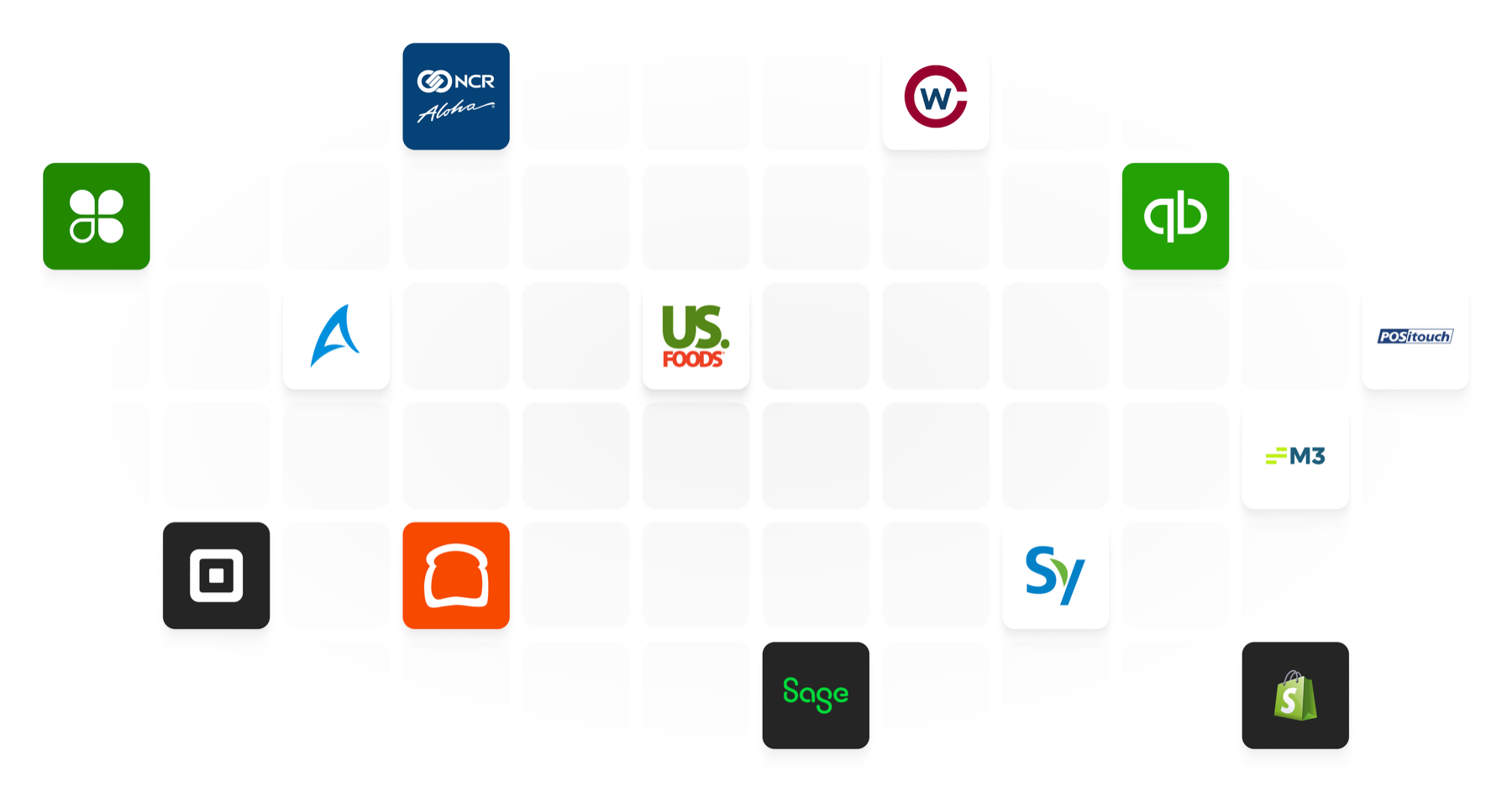
Sales flow in from Toast, Square, NCR Aloha, and more to drive theoretical usage; costs flow out to QuickBooks, Sage, and M3. One set of numbers, end to end.
Inventory & Recipes vs. the spreadsheet you're fighting now
| Clipboard counts + spreadsheet recipes | Craftable | |
|---|---|---|
| Counts | Clipboard on the shelf, re-typed later | Mobile, barcode-assisted, posts instantly |
| Recipe costs | Priced once, stale within weeks | Repriced from every invoice, automatically |
| Food cost % | One blended number at month-end | Live, by dish, by location |
| Variance | A mystery you absorb | Ranked by ingredient, with dollar amounts |
| Menu decisions | Gut feel and anecdote | Margin × popularity on real data, simulated first |
| Multi-location | A different file per site | Transfers, counts, and costs on one platform |
Operators run tighter food cost on Craftable.




What operators ask about inventory
How do counts actually work?
Shelf-to-sheet, on any device. Walk the walk-in with a phone or tablet, scan barcodes for audits and receiving, and the count posts the moment it's done. Transfers between departments and locations are tracked, so on-hand numbers stay consistent everywhere.
How do recipe costs stay accurate?
Every invoice Craftable reads updates the cost of the items on it — Invoice AI maps invoice lines to inventory items automatically. When an ingredient's price moves, every recipe, sub-recipe, and batch recipe that uses it reprices on its own.
What's the difference between theoretical and actual food cost?
Theoretical is what your recipes say you should have used, based on what the POS sold. Actual is what your counts and purchases say you did use. Craftable computes both and shows the gap by ingredient and by dish — over-portioning, waste, and unrecorded usage stop hiding in one blended number.
Does it work across multiple locations?
Yes. Counts, transfers, recipes, and costs live on one platform with per-location visibility — bartaco runs 32 locations on Craftable and cut food cost variance in half. Menu performance compares across sites, so a fix found at one location rolls out to all of them.
See your real food cost — plate by plate.
In 30 minutes, we'll walk your count-to-P&L flow: where the variance hides now, and what live recipe costing, usage matching, and menu engineering look like on your menu.
See your menu costed live.
Book a demo and we'll walk your count-to-P&L flow. It takes about 20 minutes.