
A dozen outlets. One property. One set of books.
Fine dining, pool bars, banquets, the food court — every outlet buys product and pours margin, and finance has to account for all of it. Craftable runs F&B purchasing, receiving, inventory, and AP on one platform: a P&L for every outlet, an audit trail behind every number, entries posting to your ERP automatically.
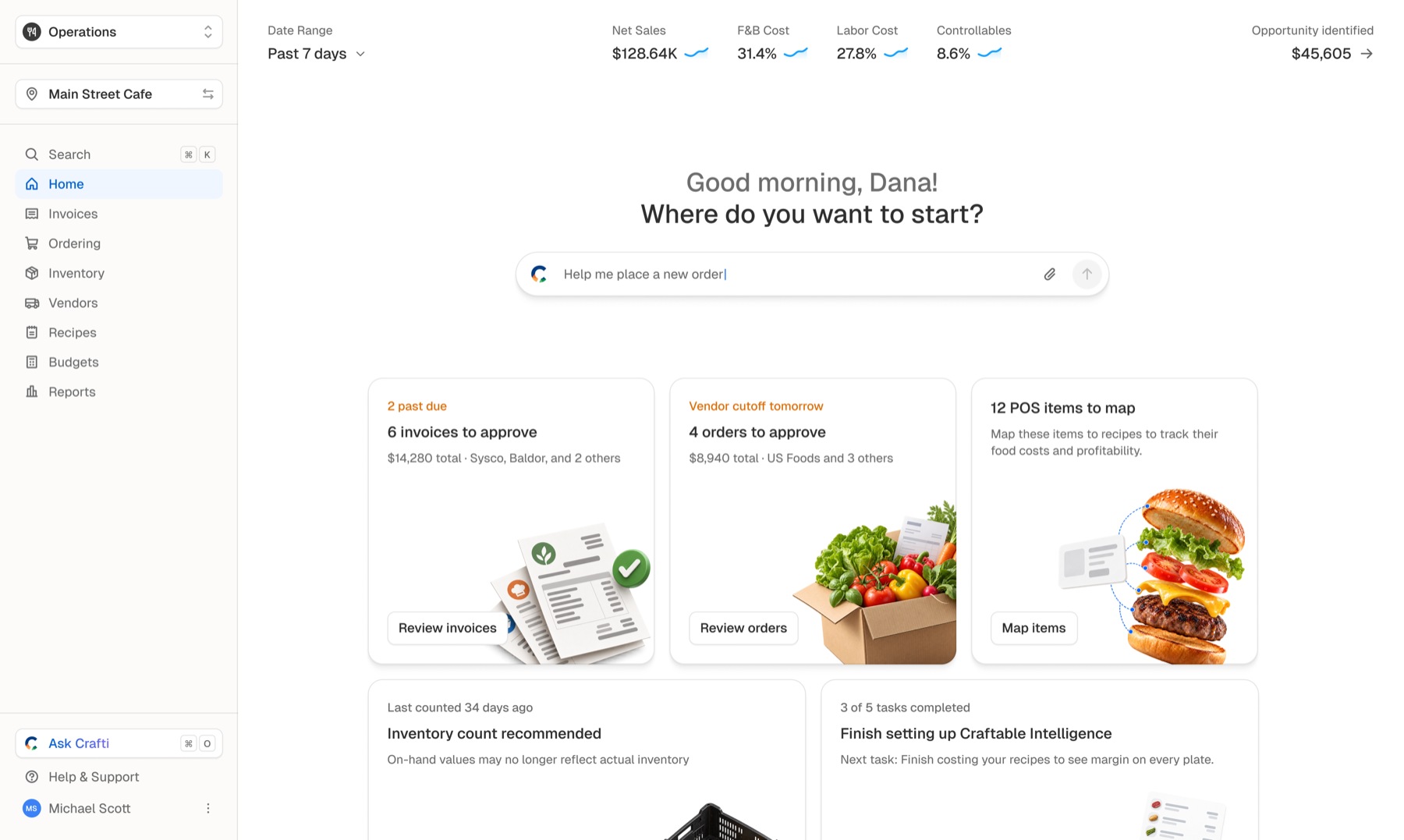
Each outlet runs like its own restaurant. Finance pays for it.
A property with twelve outlets has twelve order books, twelve receiving habits, and twelve versions of what a case of limes costs. Consolidating that in spreadsheets is where the month goes — and where the margin hides.
Purchasing fragments across outlets
The steakhouse, the pool bar, and banquets each order on their own — same vendor, different prices, nobody holding the contract line. Off-contract buying surfaces at month-end, after it's been paid.
The cost · negotiated pricing you don't captureOutlet P&L arrives weeks late
Finance consolidates outlet costs from spreadsheets, emailed invoices, and whatever the chefs wrote down. By the time an outlet's food cost is known, the month that caused it is over.
The cost · decisions made on stale numbersControls don't hold at property scale
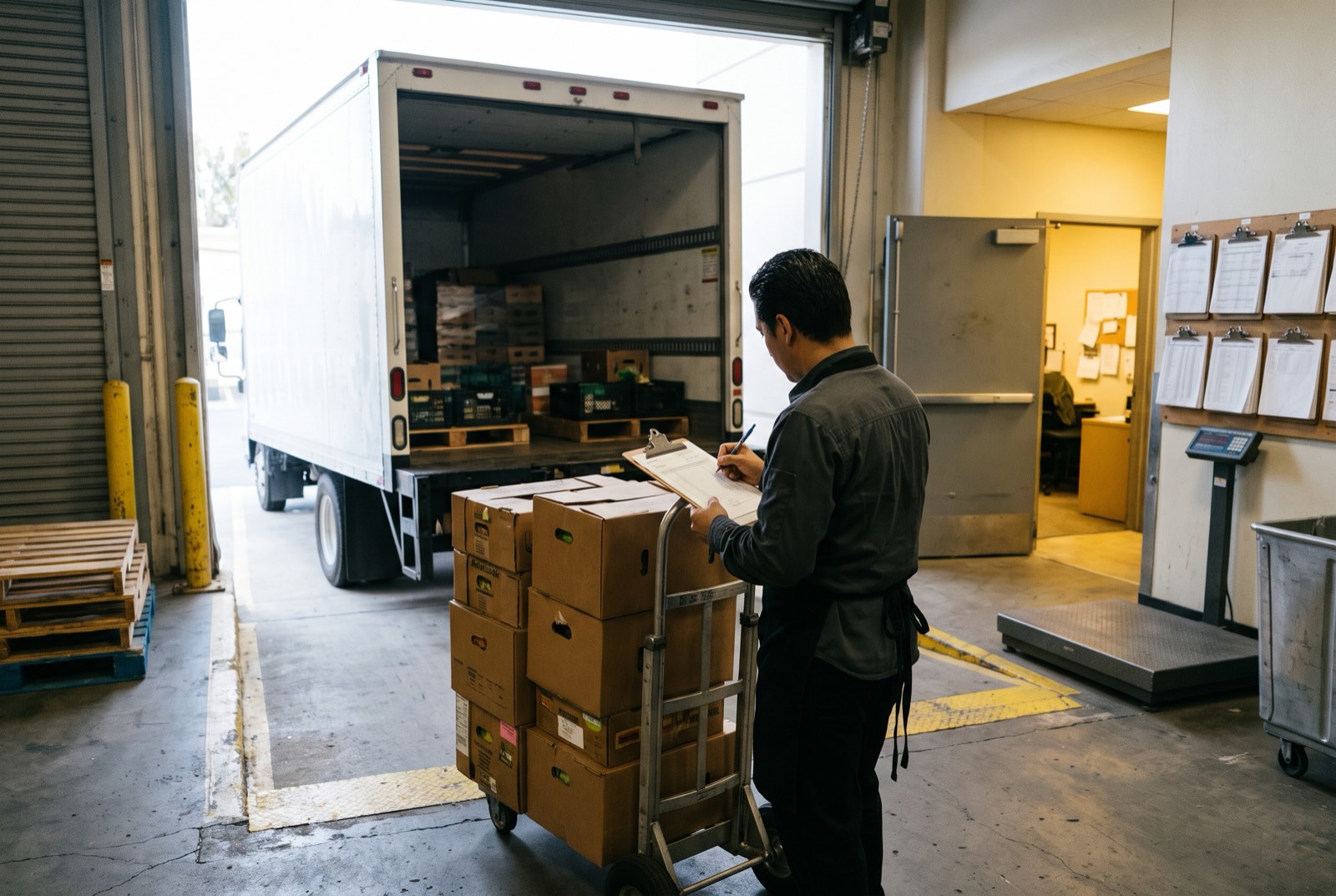
Product moves from the dock to the commissary to six outlets, and the paper trail doesn't follow. When audit or finance asks who approved an invoice or where a case went, the answer is a search party.
The cost · audit prep measured in daysEvery outlet, wired to the same ledger.
This is the shape of the platform on a property: each outlet orders, receives, and counts in its own cost center — and every transaction lands on one spine finance can close from.
One platform under every room that serves.
Different menus, different margins, different service models — the same purchasing, receiving, and cost engine underneath. Each outlet gets its own catalog, its own counts, and its own P&L line.
Fine dining
Plate costs tracked against actual invoice prices — the signature menu's margin is a number, not a feeling.
Pool bars & beverage
Beverage inventory and ordering per bar — a cabana program's cost structure doesn't blend into the casino lounge's.
Banquets & events
High-volume ordering for a 600-cover night, received and matched like any other purchase — nothing disappears into "event costs."
Buffets & QSR court
The outlets that move the most product get the same inventory discipline as the steakhouse — pars, counts, and usage by outlet.
Lounges, café & room service
Every remaining outlet lands in the same ledger — its own order guides, its own counts, its own cost center.
Central receiving
Receive centrally, route to outlets, and keep the cost attached to wherever the product actually went.
From the loading dock to the ledger, one connected record.
Purchasing, receiving, invoices, and outlet costs run through the same platform — so the number finance closes on is the number the dock signed for.
Purchasing centralizes
Every outlet orders from one approved catalog — negotiated prices, vendor minimums, and order guides per outlet.
The dock receives once
Deliveries check in against the PO at receiving — shorts, substitutions, and price changes caught at the door.
Invoices 3-way match
PO, receipt, and invoice reconcile line by line. Off-contract prices get flagged before approval, not after payment.
Costs post by outlet
Every purchase lands on the outlet that used it — food cost, pour cost, and usage per cost center, updated as invoices clear.
The ERP syncs
GL-coded entries post to your accounting or ERP system automatically — mapped to your chart of accounts once.
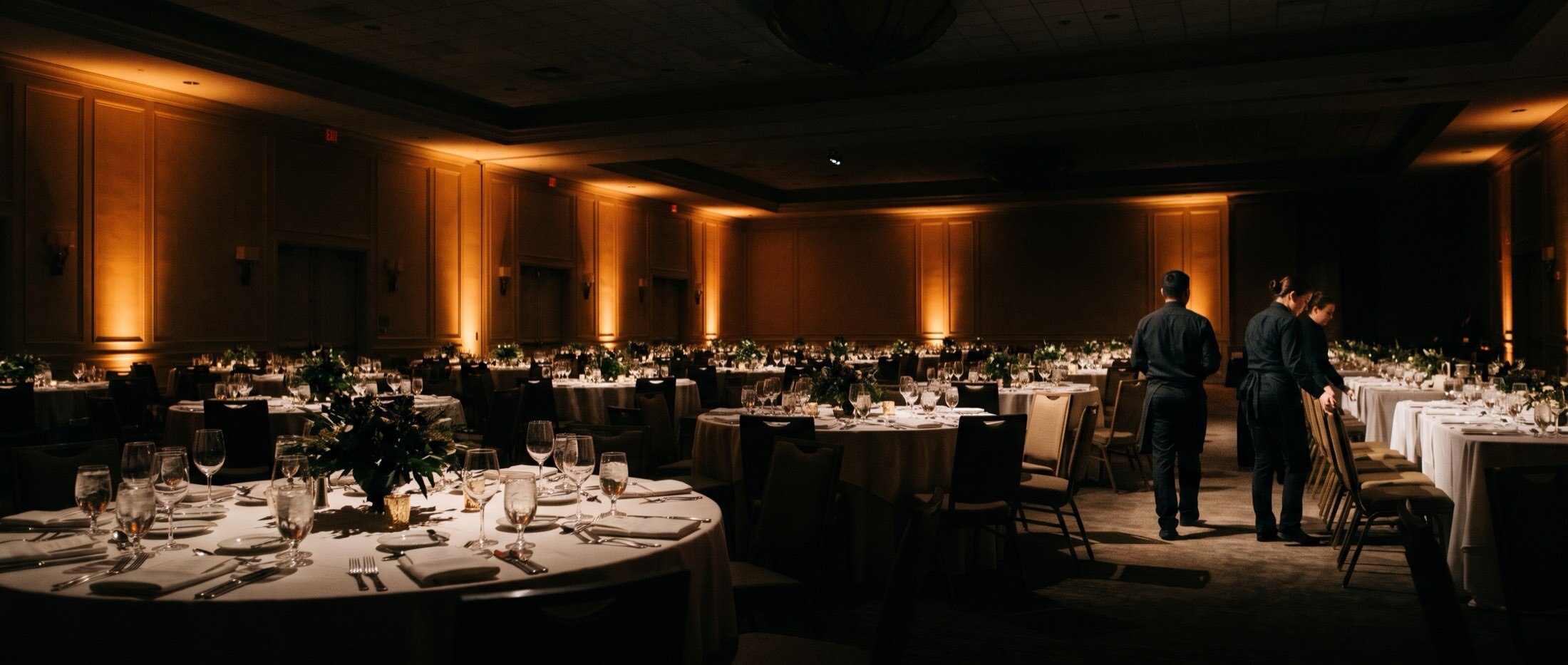
A banquet for six hundred. A nightcap for one. Both land on the right P&L.
Invoice volume at property scale, handled line by line.
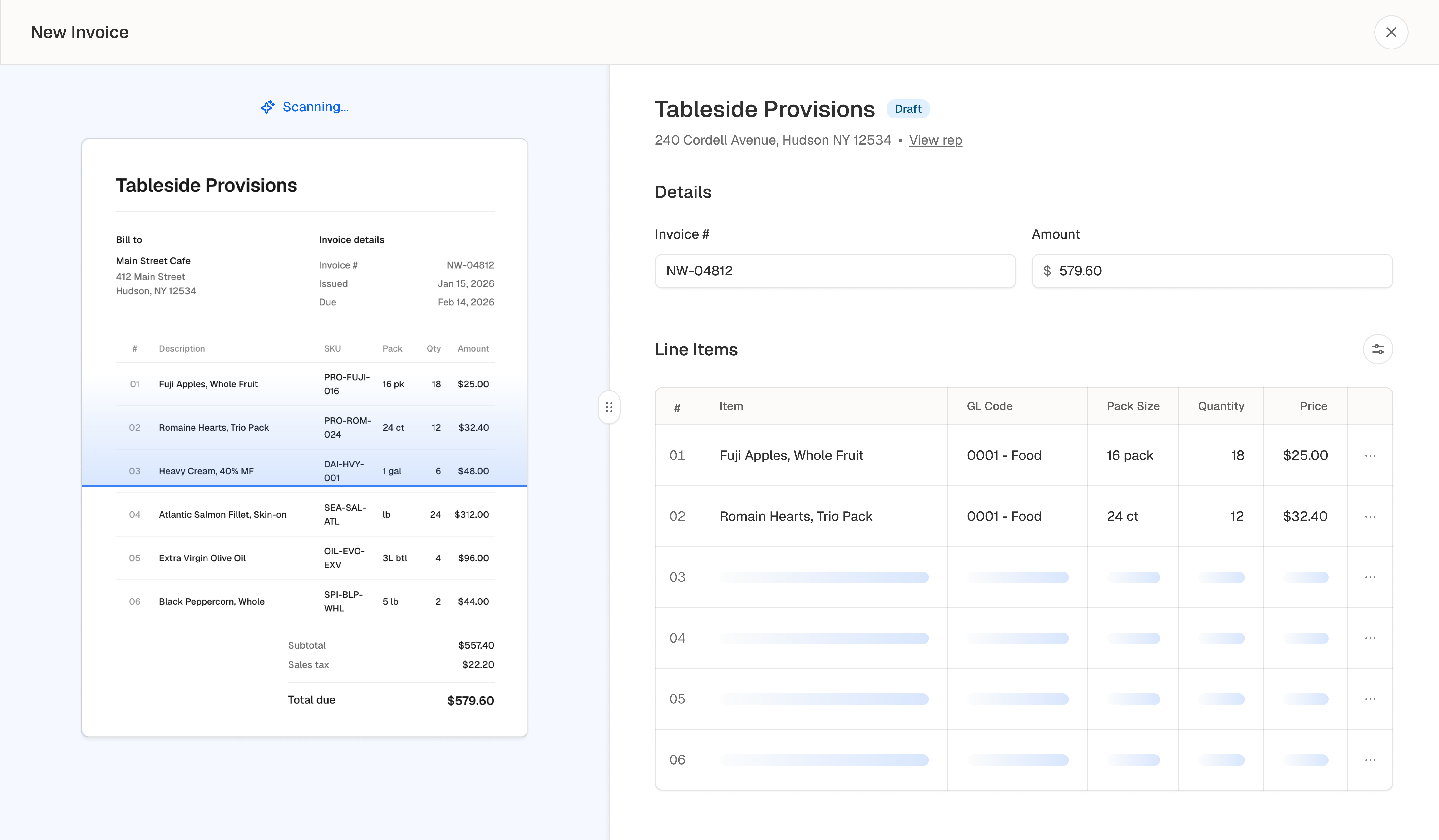
Hundreds of invoices a week come off the dock. Each one gets read, coded, and matched against the PO and what receiving signed for — and the record behind it holds up when finance asks.
Invoices read and coded before anyone types.
Invoice AI turns each vendor invoice into line items as it arrives — so AP at property volume is a review queue, not a data-entry job.
The controls your finance team asks for, built into the workflow.
Approval routing, receiving discipline, and a transaction record that holds up — because at property scale, "we'll find the paperwork" is not a control environment.
Enterprise F&B, run like it's one operation — because now it is.
Centralized purchasing, property-wide
One approved catalog with negotiated pricing across every outlet. Orders outside contract get flagged before they're placed — not found at month-end.
Outlet-level P&L visibility
Each outlet is its own cost center. Food cost, beverage cost, and purchasing roll up by outlet and across the property — daily, not at close.
AP automation at property volume
Hundreds of invoices a week, read line by line, 3-way matched, and routed for approval — with exceptions surfaced instead of buried.
Inventory & transfers between outlets
Counts by outlet, and product that moves from the commissary to a bar carries its cost with it — usage lands where it happened.
Controls & audit trail
Approval routing on spend, receiving verified against the PO, and a complete order-to-payment record on every transaction.
ERP & accounting integration
GL-coded entries sync to M3, Sage Intacct, Oracle NetSuite, Microsoft Dynamics GP, and 30+ other systems — mapped once, posted automatically.
Built to sit inside an enterprise stack.
POS and labor systems in, vendor invoices in, coded entries out to accounting and ERP — 100+ connections across the hospitality stack, configured during onboarding.
Property F&B on Craftable vs. how it runs now
| Spreadsheets + point systems | Craftable | |
|---|---|---|
| Purchasing | Each outlet orders its own way | One catalog, outlet-level order guides |
| Contract pricing | Deviations found at month-end | Off-contract prices flagged before approval |
| Outlet P&L | Consolidated by hand, weeks behind | Costs post by outlet as invoices clear |
| Receiving | Signed and filed, rarely checked | Verified against the PO at the dock |
| Audit trail | Reconstructed on request | Order-to-payment record on every transaction |
| Accounting close | Re-keyed into the ERP | GL-coded entries sync automatically |
The same engine that runs 10,000+ operations.
Craftable runs purchasing, inventory, and AP for operators from single-unit restaurants to multi-state hospitality groups. A property with a dozen outlets runs on the same platform — with the structure enterprise finance requires.
What property teams ask
Can Craftable handle multiple outlets on one property?
Yes — that's the structure it's built around. Each outlet operates as its own cost center with its own order guides, counts, and P&L visibility, while purchasing, vendor contracts, and reporting stay centralized at the property level. Finance sees every outlet in one view.
Does Craftable integrate with our ERP and accounting systems?
Craftable connects with 35+ accounting, ERP, and BI platforms — including M3, Sage Intacct, Oracle NetSuite, Microsoft Dynamics GP, and QuickBooks. Invoices and GL entries sync already coded to your chart of accounts, mapped once during onboarding.
How does centralized purchasing work when outlets order differently?
Purchasing runs through one approved vendor catalog with negotiated pricing, while each outlet keeps its own order guides and pars. Outlets order what they need; the property keeps contract control. Orders or invoices that deviate from agreed terms get flagged before approval.
What does the audit trail cover?
Every transaction keeps a complete order-to-payment record: who placed the order, what price was agreed, what was received at the dock, who approved the invoice, and what posted to the GL. When finance or audit asks, the answer is a report, not a records search.
Run every outlet on the property from one platform.
In 30 minutes, we'll map your outlets, your vendors, and your ERP to Craftable — and show you what outlet-level P&L looks like when it updates as invoices clear, not weeks after close.
See every outlet on one platform.
Book a demo and we'll map your outlets, your vendors, and your ERP to Craftable — and show you outlet-level P&L that updates as invoices clear.