The autonomous back office isn't a software problem. It's a trust problem.
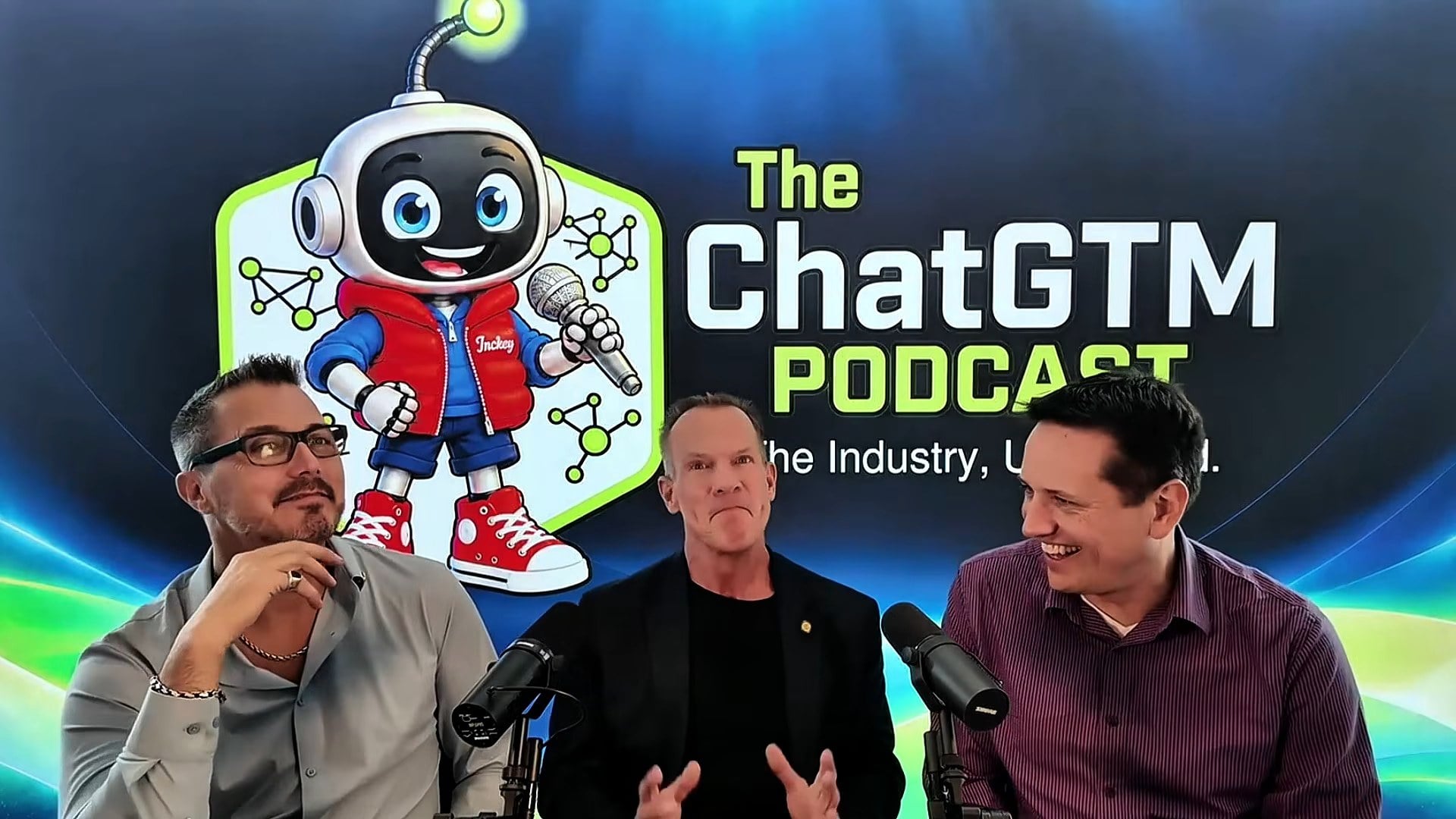
Craftable Chief Customer Officer Chris Dishman recently joined Michael Beck and Chad Horn on the ChatGTM Podcast, recorded live at Prosper Accelerate in Dallas, to talk about turning AI hype into practical value, faster implementations, and what it takes for operators to hand work over to the system.
Watch the full episode here.
Every operator has heard the pitch by now. AI will run the back office.
Chris has heard it too, mostly from the other side of the table. As he told hosts Michael Beck and Chad Horn, most people "hear AI, they see AI, and they have no idea how that's going to help" them day to day, beyond asking a chatbot what to make for dinner.
That gap is where Chris spends his time. He has led customer success teams for decades, and at Craftable his job is to make sure the technology actually lands: implemented, adopted and earning its keep in the restaurant.
His starting point is one most vendors skip: the software alone won't get you there.
The Technology Is Not Going to Solve It for You
Craftable's long-term vision is an autonomous back office, one that gives managers more time with guests and less time buried in spreadsheets. Chris was blunt about what that requires from operators.
"The technology is not going to solve their problem. You've got to have rigor and operational discipline."
An autonomous back office runs on data, entered on a regular cadence. Craftable can build the tools, but it can't make a team count inventory or receive invoices every day. That's where implementation, training and adoption come in: the customer success team looks at what each operator is and isn't doing, coaches them, and shows the value they're getting against the cost of doing nothing.
Months of Setup, Compressed
Michael spent 16 years implementing back-office software before starting the podcast, and he remembers the old reality: months to configure an item master, months to test, and a year and a half in, maybe a few stores live.
Chris walked through what has changed:
- Recipes from a photo. Take a picture of a recipe, and AI reads it, matches the ingredients to items in inventory, and asks you to confirm the right onion or the right fish.
- Invoices in seconds. Scan an invoice from a vendor and it's in the system, fully detailed, in under 90 seconds.
- No more item lists by hand. Send the last 90 days of invoices, and Craftable scans them in to build the item list.
The result: Craftable can bring multiple concepts live in one to two months, and has launched restaurants in less than a month. The pace depends on the customer. A large group with strong operating discipline moves fast. A small owner-operated shop may need more training and structure first.
The team even caught itself in an old habit. "We were telling people we're getting you out of spreadsheets," Chris said, "and then the first thing we would do is send them a spreadsheet." That's being retired too.
Trust Arrives on a Mule
Chad asked the question at the center of the autonomous back office: how does an operator get comfortable letting the system act on its own? Chris answered with a line he'd picked up: "Trust arrives on a mule and leaves in a Maserati."
His answer had two parts. First, show your work. An answer isn't enough; operators need the reasoning behind it. Second, autonomy is not "set it loose and let it run." It needs guardrails, checks and balances.
In practice, trust builds in stages:
- Explain. "It looks like you're going to be out of chicken by Wednesday, based on your current forecast. You need to order this much chicken tomorrow to cover you to your next delivery."
- Approve. "Do you want me to go ahead and order that for you?" with a recommended vendor.
- Delegate. Once confidence is built, a weekly digest of everything the store will need, instead of a daily back-and-forth.
And when trust breaks? Michael put it simply: when a system isn't working, the Excel spreadsheets start showing up again. Chris's answer is enablement: implement it right, then explain the why behind every ask, so teams keep using the platform long after go-live.
Fewer Dashboards. Three Things That Need You Today.
Craftable has been around for more than 13 years, and Chris acknowledged that what looked great in a platform 13 years ago doesn't today. The team is rearchitecting the platform to be AI native, and simplifying everyday workflows so adoption stays high in an industry with notoriously high turnover.
Two design ideas stood out:
- The thumb test. On a phone, can a manager do what they need within the reach of one thumb?
- A home screen, not another dashboard. A GM walks in and sees the three things that need action today: you're going to be out of chicken, set next week's schedule, and so on.
As Chris put it, "nobody wants another dashboard or a chart" to decode. The goal is to show managers what they need to know, when they need to know it.
What Customers Are Saying
The strongest feedback, Chris said, is on AI insights that lead straight to an action. He shared two examples.
The feta cheese question. One of Craftable's larger customers wanted to take a salad off the menu across multiple locations. Their procurement, finance and analytics teams had pulled reports and run them through general-purpose AI tools without a clear answer. In a 15-minute call, they asked Crafti, Craftable's AI assistant. The salad used about 473 pounds of feta a month, roughly 45% of their total feta usage. Ordering to the usual par after cutting it would have left them with a lot of extra feta.
The flash P&L. At a recent customer advisory board, one operator said his weekly flash P&L took about an hour to stitch together. Now he asks Crafti to run it and has it in a couple of minutes.
Both are what Chris calls a "pull": someone asks, and the system answers. The bigger unlock is the "push," when Craftable tells operators "the thing that you didn't know to ask" that's going to affect their margins.
Call the Shot: Forecasting This Holiday Season
Asked what operators will run into this holiday season that should prompt a call to Craftable, Chris picked forecasting. Sales forecasts now drive prep, production, ordering and labor, and with so much uncertainty in the world, the question is whether this December will look anything like last December.
His advice: get a real understanding of what has happened, what's happening now and how the last nine months are trending, then translate that into this year's plan.
Built With Operators in Mind
The episode closed with what Chris wishes more people knew about Craftable: it was built with operators in mind, around the real pain they're feeling right now.
"We want to be a part of changing and improving, not necessarily just slinging software."
Listen to the Full Conversation
Want to hear the complete discussion on autonomous back offices, faster implementations, earning operator trust and AI that leads to action?
Watch Chris Dishman on the ChatGTM Podcast with Michael Beck and Chad Horn here.
Craftable is the single back office for restaurant and hospitality operators, unifying invoices, inventory, ordering, and daily profit-and-loss visibility in one system. Operators use Craftable to control food and beverage costs, automate accounts payable, and act on their numbers the same day — not at the end of the month.
Craftable serves hospitality groups including bartaco, Hôtel Swexan, TC Restaurant Group, Woods Coffee, and José Andrés Group.